
Introduction
In modern retail refrigeration systems, open refrigerated display case energy loss is one of the most expensive and overlooked operational problems faced by supermarkets and grocery stores. One of the major contributors to this issue is damaged, worn-out, or loosely fitted night covers.
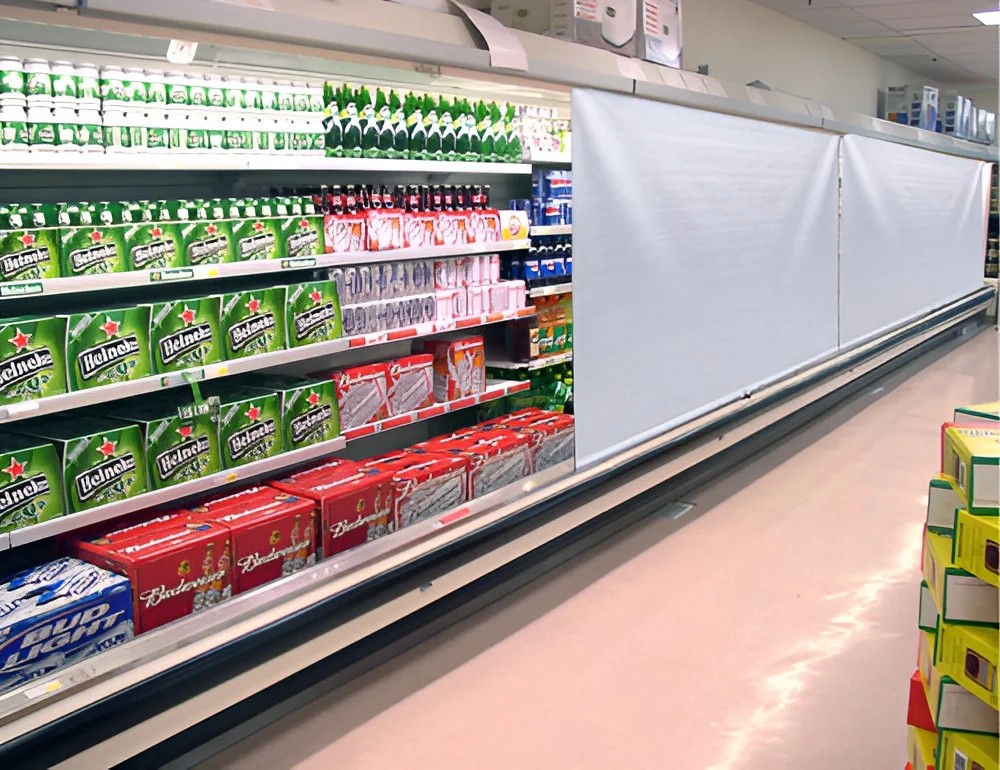
Night covers are designed to create a protective thermal barrier during non-operational hours. However, when they are not properly installed or maintained, they fail to perform this function effectively. As a result, cold air escapes, warm air enters, and refrigeration systems lose their ability to maintain stable internal conditions.
This disruption directly affects energy consumption, equipment efficiency, and product freshness. Over time, even small inefficiencies caused by poor cover conditions can significantly increase operational costs and reduce overall system performance.
How Loose Night Covers Disrupt Cooling Performance
When night covers are not properly sealed, they create multiple entry and exit points for air exchange. This leads to increased cold air loss in open display cases, especially during long overnight periods when systems are expected to remain stable.
Instead of preserving internal temperatures, refrigeration units are forced to compensate for constant air leakage. This results in unnecessary cooling cycles and increased energy consumption.
Key operational impacts include:
- Continuous escape of chilled air during off-hours
- Entry of warm ambient air into refrigerated zones
- Increased compressor workload in the morning
- Delayed temperature recovery before store opening
- Reduced overall refrigeration balance
These issues directly reduce supermarket refrigeration efficiency, making it harder for stores to maintain consistent performance across all refrigerated departments.
Energy Waste and System Overload
One of the most significant consequences of damaged or loose night covers is energy waste. When covers fail to seal properly, refrigeration systems are exposed to uncontrolled environmental conditions.
This leads to higher heat gain in open refrigeration systems, which forces compressors and cooling units to operate longer than necessary. Instead of resting during closed hours, the system continues working to stabilize fluctuating temperatures.
Main energy inefficiency effects include:
- Increased electricity consumption overnight
- Higher compressor cycling frequency
- Unstable cooling recovery patterns
- Reduced equipment lifespan due to overuse
These inefficiencies significantly reduce the ability to reduce refrigeration energy consumption, especially in large retail environments where multiple cases operate continuously.
Over time, this leads to higher utility bills and reduced sustainability performance across the store.
Temperature Instability and Product Quality Risks
Loose or damaged night covers also create direct risks for food safety and product quality. Without proper sealing, refrigerated environments become unstable, resulting in refrigerated case temperature instability.
This instability affects sensitive products such as dairy, meat, seafood, and fresh produce. Even slight temperature fluctuations can accelerate spoilage and reduce shelf life.
Common consequences include:
- Faster deterioration of perishable goods
- Increased product shrink in fresh departments
- Reduced visual appeal of displayed products
- Higher risk of food waste
Maintaining proper temperature balance is essential for grocery store refrigeration optimization, especially in stores that rely on high product turnover and strict freshness standards.
Why Proper Night Cover Maintenance Matters
Well-maintained night covers play a crucial role in stabilizing refrigeration systems and improving overall store efficiency. When properly installed, they help maintain internal conditions and reduce unnecessary energy loss.
Benefits of properly functioning night covers:
- Improved cold air retention in supermarket displays
- Reduced strain on refrigeration compressors
- More stable overnight temperature control
- Faster recovery at store opening
- Lower energy consumption during off-hours
Additionally, they help ensure proper case temperature control supermarket, which is critical for maintaining product safety and quality.
Operational Benefits for Grocery Stores
When night covers are properly maintained and correctly fitted, grocery stores experience several operational advantages that go beyond energy savings.
Key benefits include:
- Lower electricity usage across refrigeration systems
- Reduced maintenance frequency and repair costs
- Improved freshness in perishable departments
- Better stock quality at opening hours
- Reduced shrink and product loss
Bullet summary of efficiency gains:
- Improved energy stability across all refrigerated units
- Reduced compressor stress and wear
- More predictable refrigeration performance
- Enhanced store-wide cooling consistency
These improvements contribute directly to reducing store-level energy inefficiencies, which is a key goal for modern supermarket operations.
Role of Technology and Quality Solutions
Modern refrigeration strategies increasingly rely on advanced solutions to improve efficiency and reduce waste. High-quality night covers, such as those developed by Econofrost (https://www.econofrost.com), are designed to provide precise fitting and improved thermal insulation.
These systems help retailers achieve:
- Better sealing accuracy
- Improved durability under daily use
- Enhanced thermal protection during off-hours
- Reduced long-term energy costs
By using engineered solutions instead of generic covers, stores can significantly improve system performance and achieve more consistent refrigeration outcomes.
Maintenance and Best Practices
To ensure maximum efficiency, night covers must be regularly inspected and maintained. Even minor damage can significantly reduce performance.
Recommended best practices:
- Inspect covers weekly for tears or misalignment
- Ensure proper installation after every shift
- Replace damaged covers immediately
- Train staff on correct handling procedures
- Monitor refrigeration performance trends regularly
Neglecting maintenance leads to gradual performance decline, increased energy waste, and reduced refrigeration stability across the store.
Conclusion
Damaged or loose night covers significantly increase thermal loss in refrigerated display cases, leading to unstable cooling environments and higher operational costs. They also increase heat transfer in refrigerated cases, which forces refrigeration systems to work harder than necessary.
Over time, this results in higher energy bills, reduced equipment lifespan, and increased product waste. However, with proper maintenance and high-quality solutions like those from Econofrost, retailers can significantly improve refrigeration stability, reduce energy consumption, and achieve long-term operational efficiency across all store departments.
For more information
Please visit www.econofrost.com