
[fsn_row][fsn_column width=”12″][fsn_text]
Real-world examples of how covers hold case temperatures during each hour of outage risk
Power outages in retail environments can pose significant risks to perishable inventory, including meat, seafood, produce, bakery, and deli products. Open refrigerated display cases, while offering high visibility and shopper accessibility, are particularly vulnerable to ambient air infiltration, making temperature control during outages critical. Econofrost night covers provide a practical solution, acting as a thermal stop-gap to maintain cold air within display cases and reduce spoilage during unexpected or planned power interruptions.
These covers complement energy-efficient refrigeration systems, low-heat LED lighting for meat display lighting, produce display lighting, bakery display lighting, and deli display lighting, ensuring products remain safe and visually appealing until power is restored.
The Vulnerability of Open Display Cases During Power Loss
Open refrigerated cases, commonly used in supermarkets and specialty food stores, allow constant airflow between the interior and the store environment. During normal operations, refrigeration systems maintain temperature consistency, but power interruptions create immediate challenges:
- Rapid Temperature Rise: Without active cooling, product surfaces are exposed to ambient air, causing temperatures to increase.
- Humidity Fluctuations: Warm, humid store air entering the case can accelerate moisture loss or condensation, impacting product quality.
- Spoilage Risk: Temperature-sensitive items such as fresh meat, seafood, and prepared deli products can deteriorate quickly if cold air is not maintained.
- Energy Demand on Recovery: Once power is restored, refrigeration systems must work harder to return cases to optimal temperatures, increasing energy consumption and equipment stress.
How Night Covers Provide a Thermal Stop-Gap
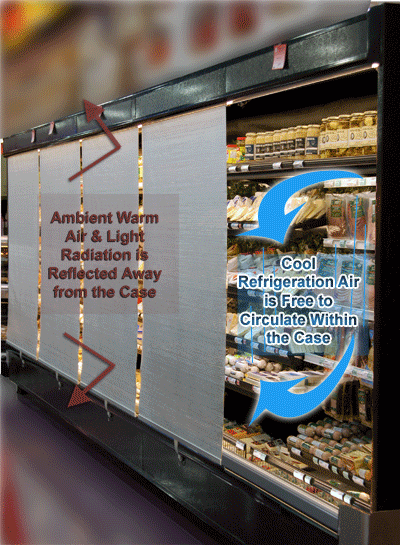
Night covers create a physical barrier over open refrigerated cases, reducing cold-air loss when refrigeration is temporarily unavailable. Their thermal stop-gap function relies on several mechanisms:
- Insulation: Covers reduce heat transfer from the ambient environment, slowing temperature rise inside cases.
- Airflow Restriction: Limiting the movement of warm store air into open cases helps preserve cold air layers around perishable products.
- Moisture Control: By minimizing humidity exchange, night covers help maintain product integrity and reduce condensation or frost formation.
These mechanisms collectively provide extra hours of temperature stability, reducing the likelihood of spoilage and maintaining product quality during outage periods.
Application Across Fresh-Food Departments
Night covers are versatile and can be deployed across various display types:
- Meat and Deli Cases
● Covers help retain low temperatures, preserving marbling, color, and freshness of meat cuts.
● Reduce surface dehydration and discoloration in deli meats and prepared foods.
● Work in combination with low-heat, food-safe LED lighting for visual merchandising and product safety. - Produce Displays
● Maintain humidity around leafy greens, herbs, and fresh-cut vegetables.
● Reduce wilting and spoilage caused by temperature spikes during outages.
● Enhance visual appeal by keeping produce crisp and hydrated. - Bakery Displays
● Protect breads, pastries, and other baked goods from condensation and frost formation.
● Ensure consistent product appearance and quality until refrigeration is restored. - Seafood Cases
● Preserve texture and color in fresh seafood while minimizing surface thawing.
● Reduce labor and discard costs by protecting sensitive items during power interruptions.
Integration into Store Protocols
To maximize the effectiveness of night covers as a thermal stop-gap, stores should implement clear protocols:
- Immediate Deployment: Covers should be placed over display cases as soon as a power interruption is detected or anticipated.
- Strategic Placement: Ensure that covers fully cover the exposed areas to prevent warm air ingress.
- Staff Training: Educate employees on rapid deployment techniques to minimize temperature exposure.
- Coordination with Refrigeration Recovery: Once power is restored, remove covers carefully to allow refrigeration systems to stabilize product temperatures efficiently.
- Monitoring: Use temperature sensors to track internal case conditions and evaluate cover effectiveness during outages.
By following these procedures, retailers can extend the safe holding time of perishable items and protect inventory value.
Operational Advantages of Night Covers During Outages
In addition to maintaining temperature stability, night covers offer multiple operational benefits during power interruptions:
- Reduced Product Loss: Slows spoilage of meat, produce, bakery, deli, and seafood items.
- Labor Savings: Less frequent emergency inspection and rotation required after power is restored.
- Energy Efficiency: Decreases recovery load on refrigeration systems, reducing energy spikes and equipment strain.
- Enhanced Store Resilience: Supports continuity of operations during unexpected outages, improving customer trust and satisfaction.
- Integration with Energy Management: Night covers complement broader energy-saving initiatives, such as LED lighting schedules and HVAC controls.
Design Considerations for Outage Protection
Not all night covers provide the same level of thermal protection. For effective outage mitigation, consider:
- Material: Insulated fabrics, such as woven aluminium, resist heat transfer and maintain cold air within the case.
- Fit: Covers should match case dimensions precisely for optimal thermal retention.
- Durability: High-traffic stores require robust materials that withstand repeated deployment without tearing or degrading.
- Ease of Use: Quick deployment mechanisms, such as foldable or rollable covers with handles, allow staff to respond rapidly to power interruptions.
- Food Safety Compliance: Materials should be non-toxic, easy to clean, and resistant to microbial growth to maintain hygiene standards.
Econofrost night covers meet these criteria, providing reliable thermal retention and operational convenience during both routine overnight closures and emergency power outages.
Conclusion
Power outages pose a significant threat to perishable inventory in open refrigerated display cases. Econofrost night covers act as a thermal stop-gap, retaining cold air, minimizing temperature rise, and reducing spoilage in meat, produce, bakery, deli, and seafood departments. By insulating cases, limiting airflow, and maintaining humidity levels, night covers provide crucial extra hours of product protection during each hour of outage risk. Integrating covers into store protocols, training staff on rapid deployment, and coordinating with refrigeration systems ensures operational resilience and cost savings. Retailers that implement night covers as part of their risk management and energy strategy can protect product quality, reduce labor and discard costs, and maintain operational efficiency even during unexpected power interruptions.
CTA
To explore professional night cover solutions for protecting refrigerated display cases during power outages, visit:
[/fsn_text][/fsn_column][/fsn_row]