
How to schedule, monitor and control nighttime closure systems alongside HVAC, refrigeration and lighting
Energy efficiency is a growing priority in the retail sector. Supermarkets, grocery stores, and specialty food retailers operate complex environments where refrigeration, HVAC, lighting, and other systems interact continuously. Open refrigerated display cases for meat, produce, bakery, deli, and seafood items offer convenience and visibility but present challenges in energy management due to cold air loss during store closures. Econofrost night covers provide a practical solution for mitigating these losses, preserving product quality, and supporting sustainability goals. Integrating night covers into a broader store energy-management plan ensures coordinated operations, maximizes efficiency, and supports operational savings.
By considering night covers as part of an energy-management strategy, stores can better control refrigeration load, reduce electricity consumption, and optimize the performance of low-heat, food-safe LED lighting used for meat display lighting, produce display lighting, bakery display lighting, and deli display lighting. This approach aligns energy-saving initiatives across multiple systems without compromising product quality or shopper experience.
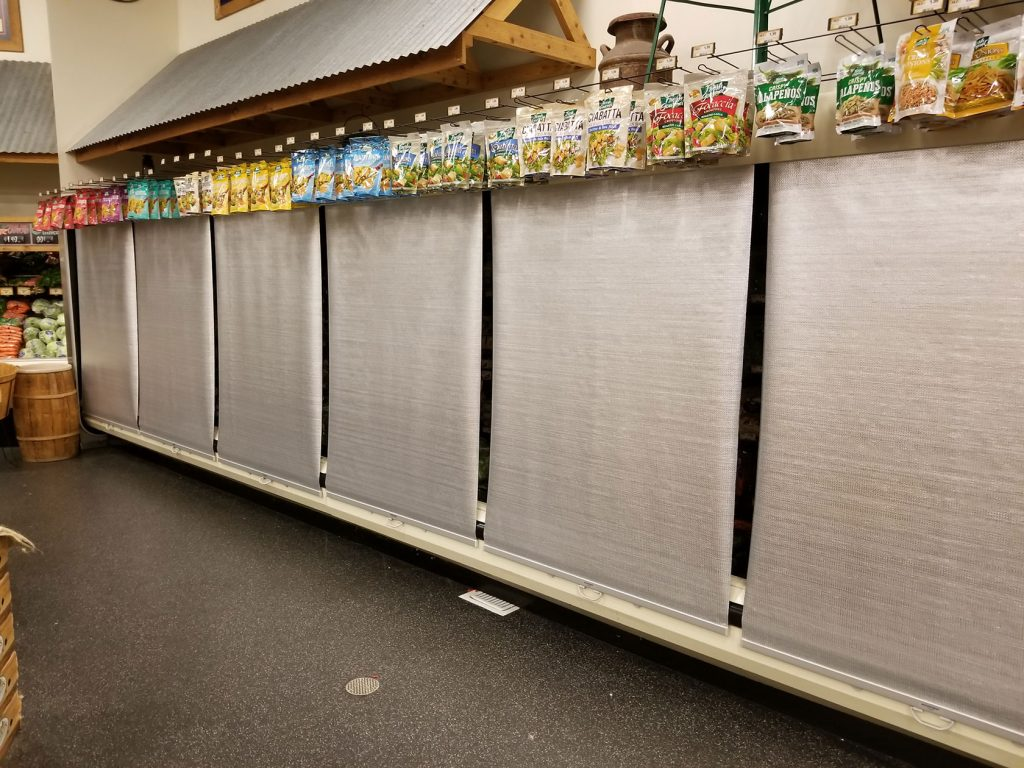
The Role of Night Covers in Energy Management
Night covers act as thermal barriers that reduce the infiltration of ambient air into open refrigerated cases during non-operational hours. Their role in energy management can be summarized as follows:
- Reducing Overnight Energy Consumption: By minimizing cold air loss, night covers lower the workload on compressors, resulting in reduced electricity use.
- Stabilizing Product Temperature: Maintaining consistent internal temperatures decreases the frequency of temperature fluctuations that could compromise meat, seafood, produce, and bakery products.
- Supporting Refrigeration Systems: Reduced stress on refrigeration systems can extend equipment life and reduce maintenance requirements.
- Enhancing Sustainability Efforts: Energy savings from night covers contribute to lower greenhouse gas emissions and improved store-level environmental performance.
By coordinating night cover deployment with refrigeration, HVAC, and lighting schedules, stores can optimize operational efficiency without requiring major infrastructure changes.
Scheduling Night Cover Deployment
Effective energy management begins with proper scheduling of night cover use. Considerations include:
- Store Closing Times: Deploy night covers immediately after operational hours to prevent unnecessary cold air loss.
- Overnight Duration: Covers should remain in place for the entire non-operational period to maximize thermal retention.
- Morning Removal: Covers must be removed before staff begin restocking, merchandising, and opening cases to shoppers.
Scheduling tools, checklists, or digital alerts can help ensure consistent use and avoid missed deployment. Integrating this schedule with store operations allows staff to manage multiple energy-saving initiatives efficiently.
Monitoring Performance
Monitoring the effectiveness of night covers is essential for maximizing energy savings. Retailers can use several strategies:
- Temperature Sensors: Placing sensors inside display cases provides real-time feedback on temperature retention overnight.
- Refrigeration Load Monitoring: Tracking compressor activity indicates reductions in energy demand due to thermal retention provided by night covers.
- Energy-Use Reports: Comparing electricity consumption before and after night cover implementation can help quantify savings and identify areas for optimization.
Monitoring performance ensures that night covers are functioning correctly and contributing effectively to store energy goals.
Operational Best Practices
To maximize the impact of night covers as part of an energy-management plan, consider the following practices:
- Full Case Coverage: Ensure covers fit precisely to prevent gaps that allow warm air infiltration.
- Staff Training: Educate personnel on the importance of night cover deployment, removal, and proper handling.
- Routine Inspection: Regularly check covers for wear, insulation integrity, and cleanliness to maintain thermal efficiency.
- Compatibility with Case Design: Use covers designed for specific case types, including multi-deck, island, and coffin units, to ensure optimal performance.
- Integration with Daily Operations: Align cover schedules with cleaning, stocking, and merchandising routines to avoid operational disruption.
Implementing these practices ensures that night covers contribute consistently to energy savings while maintaining department productivity
Benefits Beyond Energy Savings
While the primary function of night covers is energy efficiency, additional operational benefits include:
- Product Preservation: Stable overnight temperatures reduce spoilage in meat, produce, bakery, deli, and seafood departments.
- Labor Efficiency: Staff spend less time managing product degradation caused by temperature fluctuations.
- Operational Consistency: Automated or scheduled use reduces reliance on manual routines, lowering the risk of human error.
- Sustainability: By reducing energy use and waste, night covers support store-level sustainability initiatives, improving corporate environmental performance.
These benefits demonstrate how night covers provide value beyond energy management alone, supporting overall store efficiency and profitability.
Choosing the Right Night Covers for Integration
Selecting night covers for energy-management integration requires careful consideration of:
- Case Type: Multi-deck, island, and vertical cases require different cover designs for effective thermal retention.
- Material and Insulation: Covers should be durable, moisture-resistant, and insulated to maintain efficiency over repeated use.
- Ease of Deployment: Covers must be simple for staff to handle and compatible with operational schedules.
- Compatibility with Lighting and Display: Covers should not interfere with LED lighting for meat, produce, bakery, deli, and seafood displays, ensuring product visibility and color accuracy.
Econofrost night covers meet these criteria, providing reliable thermal retention while supporting energy-management goals.
Conclusion
Integrating night covers into a store’s energy-management plan is a practical strategy for enhancing refrigeration efficiency, stabilizing temperatures, reducing energy consumption, and maintaining product quality. Proper scheduling, monitoring, and coordination with HVAC and lighting systems ensure that covers deliver consistent performance while minimizing staff workload. Econofrost night covers are specifically designed for refrigerated display cases across meat, produce, bakery, deli, and seafood departments, offering reliable thermal retention, operational convenience, and support for store sustainability initiatives. By incorporating night covers into a comprehensive energy-management approach, retailers can optimize department performance, reduce costs, and promote operational efficiency without compromising product safety or shopper experience.
CTA
To explore professional night cover solutions for integrating into energy-management systems, visit: