
[fsn_row][fsn_column width=”12″][fsn_text]
Adjusting sizing, installation and usage practices for limited-space and high-turnover environments
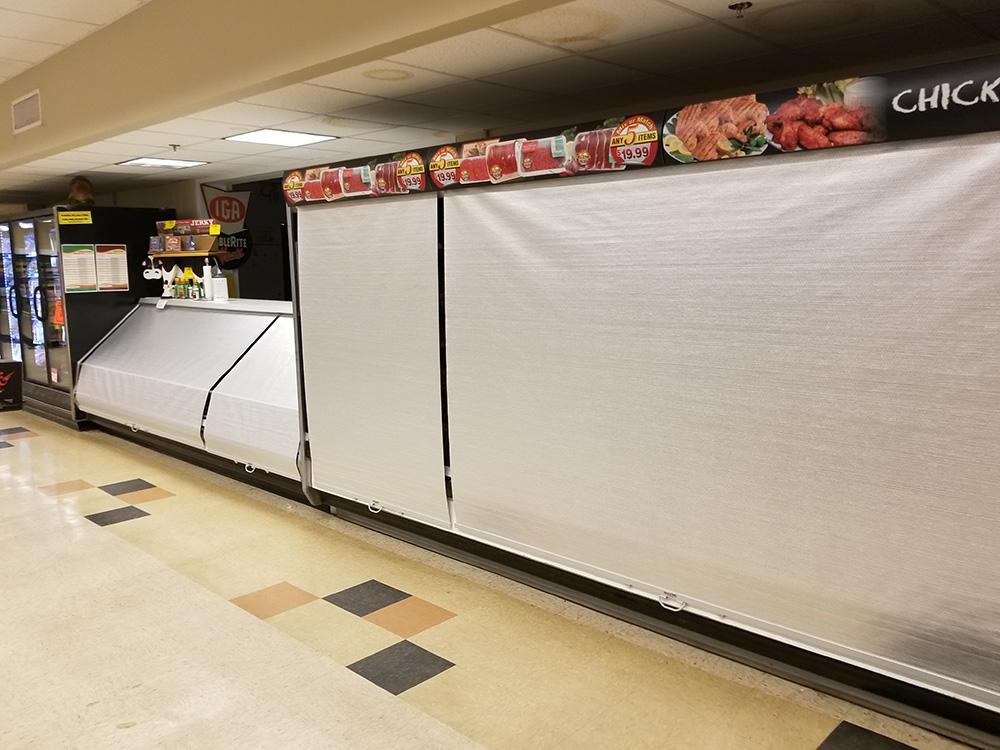
Convenience stores and small-format retail outlets are increasingly incorporating fresh-food sections to meet customer demand for ready-to-eat meals, produce, bakery items, deli selections, and premium meats. These smaller spaces often rely on compact open refrigerated display cases to maximize product visibility and accessibility. While open cases provide an appealing presentation, they introduce significant operational challenges, particularly in energy efficiency, thermal retention, and product preservation. Econofrost night covers offer a practical solution to these challenges, providing thermal insulation, product protection, and energy savings even in high-turnover, limited-space environments.
The deployment of night covers in convenience stores and small-format retail requires careful consideration of sizing, installation practices, and routine usage. Unlike large supermarkets with multi-deck or island freezer cases, smaller stores face unique constraints that must be addressed to maintain operational efficiency and refrigeration effectiveness.
The Importance of Night Covers in Small-Format Retail
Open refrigerated display cases are inherently vulnerable to cold-air loss, which can lead to:
- Increased energy consumption as refrigeration systems work harder to maintain temperatures
- Rapid temperature fluctuations affecting perishable products such as fresh meat, seafood, produce, deli items, and baked goods
- Condensation or frost buildup in smaller cases, potentially compromising product quality and shelf life
Night covers create a thermal barrier over these cases, reducing heat ingress, limiting moisture fluctuations, and preserving product integrity overnight or during off-peak hours. In small-format stores, where display cases are often located close to the entrance or near high-traffic areas, night covers help maintain refrigeration efficiency while supporting store sustainability goals.
Sizing Considerations for Limited Space
Proper sizing is critical to ensure night covers provide effective thermal retention without interfering with store operations:
- Custom Fit for Each Case: Unlike standardized supermarket units, small-format display cases vary widely in dimensions. Custom night covers ensure full coverage and optimal insulation.
- Lightweight and Foldable Design: Covers should be easy to deploy, remove, and store in limited backroom or storage areas. Foldable or rollable designs maximize space efficiency.
- Height Adjustments: Small-format cases may have reduced vertical clearance due to low ceilings or compact layouts. Covers must be designed to fit these height constraints while maintaining thermal performance.
Econofrost night covers are engineered to accommodate these spatial challenges, providing effective insulation without impeding staff access or customer visibility.
Installation Practices in High-Turnover Environments
Convenience stores and small-format retailers often experience high customer turnover and frequent product restocking, making ease of installation a priority:
- Quick Deployment: Covers should be lightweight and easy to position, allowing staff to apply them at the close of business quickly.
- Durable Materials: Woven aluminium or similarly robust fabrics withstand repeated handling and daily deployment without compromising insulation.
- Integrated Handles: Simplify placement and removal, reducing strain on employees and ensuring consistent coverage.
- Foldable or Rollable Storage: Supports compact storage in tight backroom spaces when covers are not in use.
Proper installation ensures consistent thermal retention and minimizes labor time, particularly important in small-format stores with limited staff.
Usage Practices for Consistent Performance
In high-turnover environments, night covers must be integrated into daily operational routines to achieve maximum benefit:
- Standardized Deployment Times: Covers should be applied immediately after closing or during periods when refrigeration is not actively needed.
- Monitoring and Adjustment: Temperature sensors or manual checks ensure that covers maintain internal case temperatures effectively.
- Routine Cleaning: Food-safe, easy-to-clean surfaces reduce hygiene risks in compact spaces where contamination could spread rapidly.
- Staff Training: Employees should be trained to handle covers efficiently, ensuring they are deployed consistently and do not interfere with product restocking or merchandising.
These practices maximize the effectiveness of night covers while reducing labor demands and operational disruption.
Operational Benefits for Small-Format Stores
The benefits of night covers in convenience stores and small-format retail include:
- Energy Savings: Reducing overnight cold-air loss lowers compressor workload and electricity use.
- Product Protection: Stabilized temperatures preserve meat, seafood, produce, bakery, and deli items, minimizing spoilage and waste.
- Labor Efficiency: Simplified deployment and minimal maintenance reduce staff time spent on refrigeration management.
- Space Optimization: Foldable and compact covers accommodate limited storage areas without impacting backroom operations.
- Sustainability Support: Lower energy use and reduced product waste contribute to store sustainability initiatives and environmental reporting.
By addressing the unique constraints of small-format retail, night covers provide measurable operational and environmental returns.
Integration with Other Store Systems
To further enhance benefits, night covers can be coordinated with other operational systems:
- Energy-Efficient LED Lighting: Low-heat, food-safe LED lighting for meat display lighting, produce display lighting, bakery display lighting, deli display lighting, and seafood display lighting complements night covers, reducing thermal load from lighting sources.
- HVAC Coordination: Minimizing warm air infiltration through ventilation systems ensures that night covers operate under optimal conditions.
- Refrigeration Scheduling: Integrating cover use with automated refrigeration scheduling can further optimize energy efficiency.
These combined strategies support high operational efficiency even in stores with limited space and staff.
Conclusion
Night covers are a valuable tool for convenience stores and small-format retail outlets seeking to enhance refrigeration efficiency, reduce energy use, and protect perishable inventory. Proper sizing, installation, and usage practices are critical in these limited-space, high-turnover environments. Econofrost night covers, constructed from durable, food-safe materials with lightweight, foldable designs, provide effective thermal retention, operational convenience, and hygiene compliance. When integrated with energy-efficient LED lighting and coordinated with refrigeration and HVAC systems, night covers deliver tangible operational, environmental, and financial benefits. By adopting these solutions, small-format retailers can maintain product quality, reduce waste, support sustainability initiatives, and optimize energy efficiency across their fresh-food departments.
CTA
To explore night cover solutions for convenience stores and small-format retail, visit: https://www.econofrost.com
[/fsn_text][/fsn_column][/fsn_row]