
[fsn_row][fsn_column width=”12″][fsn_text]
Introduction
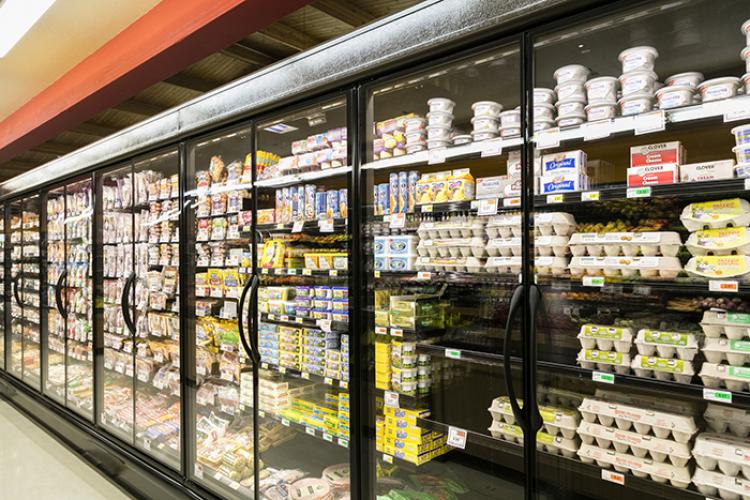
Dairy products are among the most temperature-sensitive categories in grocery retail, requiring strict control to maintain safety, freshness, and shelf life. When overnight conditions are not properly managed, even small fluctuations can significantly impact product stability. One of the key underlying issues in retail environments is refrigerated case temperature instability, which becomes more pronounced during low-traffic hours when system monitoring is reduced.
Ensuring stable conditions overnight is not only about preserving product quality but also about maintaining supermarket refrigeration efficiency, which directly influences energy use, spoilage rates, and operational costs. Dairy displays, in particular, demand consistent protection because their biological composition makes them highly vulnerable to even minor temperature shifts.
Why Dairy Products Are Highly Sensitive Overnight
Dairy items such as milk, yogurt, cream, and cheese contain proteins and moisture levels that react quickly to environmental changes. During overnight hours, refrigeration systems often operate under reduced supervision or adjusted settings, which can create instability in cooling performance.
A major contributing factor is cold air loss in open display cases, especially in merchandising units that are not fully sealed or protected during non-operational hours. When cold air escapes, internal temperatures rise gradually, even if systems are still running.
At the same time, stores may experience refrigerated case airflow issues, where reduced nighttime circulation affects how evenly cold air is distributed across products. This can lead to uneven cooling zones inside dairy sections, increasing the risk of localized spoilage.
These conditions make overnight protection a critical requirement rather than an optional efficiency measure.
Temperature Fluctuations and Dairy Product Degradation
Even slight temperature variation can significantly affect dairy quality. When cooling conditions are unstable, microbial activity accelerates, and product shelf life shortens.
A key concern in this process is heat gain in open refrigeration systems, which occurs when external warm air slowly infiltrates display areas during low-activity hours. This gradual warming is often unnoticed until product quality is already compromised.
Additionally, unstable cooling performance reduces refrigeration thermal performance, making it harder for systems to maintain consistent temperature recovery after minor disruptions.
For dairy products, this results in:
- Faster souring of milk and cream
- Texture changes in yogurt and soft cheeses
- Reduced shelf life across multiple product categories
- Increased likelihood of early spoilage before store opening
Energy Efficiency Challenges During Overnight Operation
Overnight refrigeration is not only about maintaining temperature—it also plays a major role in energy consumption. When systems are not properly optimized, they often cycle inefficiently, leading to unnecessary power usage.
This directly affects efforts to reduce refrigeration energy consumption, as refrigeration units must compensate for heat infiltration and temperature drift during low-monitoring hours.
It also impacts grocery store energy management, since inconsistent overnight performance creates unpredictable energy demand patterns that are harder to control or optimize.
Over time, this can result in:
- Higher electricity usage during early morning recovery cycles
- Increased strain on compressors and cooling components
- Reduced system lifespan due to frequent load fluctuations
- Inefficient energy distribution across store zones
Operational and Product Quality Risks
When overnight protection is insufficient, dairy departments face both operational and financial risks. Temperature instability leads to product degradation that is often only detected during morning stocking checks.
This contributes to increased reduce food waste grocery store challenges, especially in high-volume dairy sections where turnover is constant.
Retailers also struggle with maintaining consistent maintain product freshness supermarket standards, as even small overnight fluctuations can affect product appearance and customer perception.
Common risks include:
- Higher product discard rates in the morning
- Reduced visual appeal of dairy packaging
- Inconsistent product quality across batches
- Increased shrink in high-value dairy categories
Importance of Proper Overnight Protection Systems
To reduce overnight temperature fluctuations, retailers must adopt better protective strategies that stabilize internal case environments. One effective approach is improving cold air retention in supermarket displays, which helps maintain consistent cooling even during low-traffic hours.
Another important solution involves enhancing case temperature control supermarket, ensuring that refrigeration systems maintain stable conditions regardless of external temperature variations.
These improvements help:
- Reduce unnecessary temperature drift overnight
- Maintain consistent cooling across dairy sections
- Improve morning product quality and appearance
- Support better energy efficiency across systems
Role of Nighttime Covering and Insulation Solutions
One of the most effective ways to stabilize overnight dairy display conditions is the use of physical insulation systems such as night covers for refrigerated display cases. These covers help reduce air exchange between the display case and surrounding environment during non-operational hours.
The refrigeration night cover benefits include:
- Reduced cold air escape during overnight periods
- Improved temperature consistency inside display cases
- Lower energy consumption during low-activity hours
- Faster stabilization when stores reopen
These solutions are especially effective in open dairy merchandisers, where environmental exposure is naturally higher.
Improving Long-Term System Performance
Better overnight protection also contributes to long-term refrigeration performance improvements. When systems are not constantly compensating for temperature fluctuations, they operate more efficiently and experience less mechanical stress.
This supports overall improve refrigeration system performance, allowing equipment to maintain stable cooling conditions with less energy input and fewer operational disruptions.
Retailers that implement consistent overnight protection strategies often experience:
- Improved system reliability
- Reduced maintenance requirements
- Lower operational costs
- More consistent product quality across dairy categories
Conclusion
Dairy displays require strong overnight temperature protection due to their high sensitivity to environmental changes and refrigeration instability. Without proper control, issues such as airflow disruption, heat gain, and cold air loss can significantly impact product quality and shelf life.
By addressing refrigerated case temperature instability and strengthening supermarket refrigeration efficiency, retailers can ensure better product preservation, reduced waste, and improved operational performance across dairy departments.
For More Information
For more insights on improving refrigeration efficiency and reducing energy loss in retail environments, visit:
https://www.econofrost.com
[/fsn_text][/fsn_column][/fsn_row]