
Introduction
In modern retail refrigeration environments, open refrigerated display case energy loss is one of the most persistent challenges affecting energy bills and product quality. Open display systems are highly exposed to ambient conditions, making them vulnerable to heat infiltration even during non-operational hours.
Reflective night covers are designed to address this issue by minimizing radiant heat transfer and stabilizing internal temperatures. When properly selected and installed, they help maintain cooling efficiency, reduce compressor workload, and improve overall system performance across supermarket refrigeration setups.
How Radiant Heat Affects Open Display Cases
Open refrigerated cases are continuously exposed to surrounding environmental conditions. Even when stores are closed, heat transfer continues through radiation, convection, and air leakage.
This leads to:
- Increasedheat gain in open refrigeration systems
- Continuous thermal imbalance during off-hours
- Higher cooling demand when systems restart
- Reduced system efficiency over time
Without proper insulation, these conditions significantly reduce supermarket refrigeration efficiency, especially in stores with large open display formats.
Role of Reflective Night Covers in Heat Control
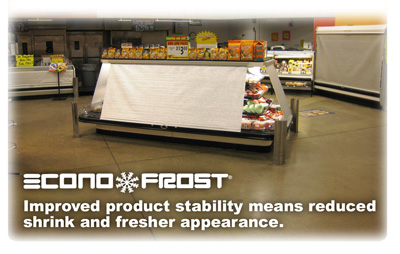
Reflective night covers are engineered to reduce radiant heat penetration by creating a physical and thermal barrier over open cases. Their reflective surface helps deflect ambient heat away from refrigerated zones.
Key functions include:
- Blocking radiant heat from store lighting and external sources
- Reducing overnight temperature drift
- Supporting stable internal cooling conditions
- Preventing unnecessary compressor cycling
By limiting heat exposure, these covers directly reduce cold air loss in open display cases, helping maintain stable conditions throughout non-operational hours.
Impact on Temperature Stability and System Performance
One of the biggest advantages of reflective covers is their ability to stabilize internal temperatures during closed hours.
Without proper coverage, refrigeration systems often experience:
- refrigerated case temperature instability
- uneven cooling recovery in the morning
- increased compressor load after reopening
- inconsistent product temperature zones
When reflective covers are applied correctly, they help maintain consistent internal conditions and reduce strain on the system.
This significantly improves grocery store refrigeration optimization, particularly in high-volume retail environments.
Energy Efficiency Benefits
Reflective night covers contribute directly to energy savings by reducing the workload on refrigeration systems during off-hours.
Key energy benefits include:
- Lower electricity consumption overnight
- Reduced compressor cycling frequency
- Improved insulation efficiency
- Decreased cooling recovery time
These improvements help retailers effectively reduce refrigeration energy consumption, especially in stores operating multiple open display units.
Bullet summary of efficiency gains:
- Reduced heat infiltration during closed hours
- Lower energy spikes during morning startup
- More stable refrigeration performance cycles
- Improved overall system balance
Operational Improvements for Retail Stores
Beyond energy savings, reflective night covers also enhance day-to-day operational performance in grocery stores.
They help:
- Improve cold air retention in supermarket displays
- Maintain consistent product freshness
- Reduce strain on refrigeration components
- Support better temperature control across departments
These benefits contribute to improved case temperature control supermarket, ensuring that products remain within safe and stable temperature ranges.
How They Reduce Food Waste and Shrink
Temperature instability is one of the main causes of product spoilage in retail refrigeration. Reflective night covers help minimize this risk by stabilizing conditions overnight.
This leads to:
- Reduced reduce food waste grocery store outcomes
- Improved shelf life of perishable products
- Lower shrink in fresh departments
- Better preservation of product quality
Bullet summary:
- Longer product freshness retention
- Reduced overnight spoilage risk
- Improved display readiness in the morning
- Lower operational losses
These improvements directly support better reduce shrink in fresh departments performance across retail operations.
Importance in Modern Refrigeration Strategy
Modern supermarkets are increasingly adopting energy-efficient strategies that integrate mechanical systems with passive insulation solutions like night covers.
Reflective covers support:
- Reduced system load during off-hours
- Improved thermal insulation without equipment upgrades
- Enhanced refrigeration stability in open cases
- Better long-term energy performance
This contributes to overall store-level energy inefficiencies reduction, helping retailers meet sustainability and cost-reduction targets.
Best Practices for Effective Use
To maximize the benefits of reflective night covers, proper installation and maintenance are essential.
Recommended practices:
- Ensure full coverage of all open display areas
- Avoid gaps that allow heat infiltration
- Inspect covers regularly for damage
- Clean reflective surfaces to maintain efficiency
- Train staff on correct installation procedures
Proper usage ensures maximum thermal protection and consistent refrigeration performance.
Role of Professional Solutions
High-quality engineered systems such as those from Econofrost (https://www.econofrost.com) are designed to optimize performance in real-world retail environments.
These solutions offer:
- Durable reflective materials
- Precision fit for various display types
- Enhanced thermal resistance
- Long-term operational reliability
Such systems help retailers achieve consistent refrigeration efficiency improvements while reducing energy waste across stores.
Conclusion
Reflective night covers play a crucial role in reducing thermal loss in refrigerated display cases, especially in open retail environments where heat exposure is constant. By minimizing heat transfer in refrigerated cases, they help maintain stable temperatures, reduce energy consumption, and improve overall system performance.
When properly implemented, these covers become a cost-effective solution for improving refrigeration efficiency, reducing food waste, and supporting long-term sustainability in modern grocery store operations.