
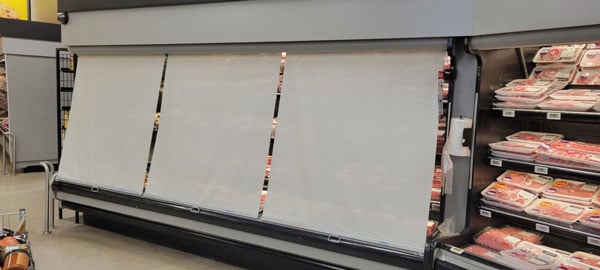
Introduction
In modern retail refrigeration planning, open refrigerated display case energy loss is not only a mechanical issue but also a layout-driven problem. Store design, aisle positioning, and airflow direction all directly influence how effectively refrigerated cases retain cold air and maintain stable performance.
When store layout is ignored during night cover selection, even high-quality covers fail to perform as expected. This results in inefficient cooling, higher energy costs, and unstable product temperatures across refrigerated departments.
For this reason, refrigeration contractors and store planners must treat layout as a core factor in selecting and positioning night covers for optimal system performance.
How Store Layout Impacts Refrigeration Performance
Store layout determines how air circulates around open display cases. Poor alignment between airflow paths and case positioning increases cold air loss in open display cases, especially during non-operational hours when night covers are most critical.
Key layout-related challenges include:
- Cases placed near entrances exposed to external air flow
- Misaligned aisles disrupting natural air circulation
- Uneven spacing between refrigeration units
- Heat sources positioned too close to display cases
These issues reduce supermarket refrigeration efficiency, forcing refrigeration systems to work harder to maintain consistent cooling conditions.
Airflow Disruption and Thermal Imbalance
One of the most significant layout-related issues is airflow disruption. When cases are placed in high-traffic or poorly ventilated zones, they experience uneven cooling distribution.
This leads to:
- Increased heat gain in open refrigeration systems
- Uneven temperature zones across display cases
- Higher compressor cycling frequency
- Reduced cooling stability during off-hours
As a result, stores struggle to achieve consistent grocery store refrigeration optimization, especially in large-format retail environments where multiple refrigeration zones operate simultaneously.
Why Night Cover Selection Depends on Layout
Night covers are not universal solutions. Their effectiveness depends heavily on store configuration and airflow behavior.
Improper selection based on layout can lead to:
- Poor sealing efficiency in corner or aisle-end cases
- Reduced insulation in high-airflow zones
- Increased condensation risk in exposed areas
- Uneven cooling recovery in the morning
To avoid these issues, contractors must evaluate layout before selecting cover type, material, and installation method.
Properly aligned covers improve cold air retention in supermarket displays, ensuring consistent thermal performance across all refrigeration units.
Energy Efficiency and Layout Alignment
Store layout directly affects how efficiently refrigeration systems operate. When cases are placed without considering airflow dynamics, energy consumption increases significantly.
This misalignment results in:
- Higher refrigerated case temperature instability
- Increased refrigeration load during peak hours
- Reduced efficiency of cooling cycles
- Greater strain on compressors and fans
Properly designed layouts combined with correctly selected night covers help stabilize temperature fluctuations and improve system balance.
This also supports better reduce refrigeration energy consumption, especially in stores aiming to lower operational costs and improve sustainability performance.
Impact on Refrigeration System Behavior
Store layout influences not only airflow but also how refrigeration systems respond to temperature changes. Poor positioning can lead to inconsistent cooling behavior across different sections of the store.
Common system-level effects include:
- Delayed cooling recovery after store opening
- Uneven case temperature distribution
- Higher energy demand during peak load hours
- Reduced effectiveness of refrigeration zoning
These issues make it difficult to maintain stable case temperature control supermarket, especially in older or partially retrofitted stores.
Best Practices for Contractors and Store Designers
To improve refrigeration performance, contractors and designers should integrate layout considerations into cover selection and system planning.
Key best practices:
- Map airflow patterns before installing night covers
- Avoid placing cases near heat-emitting equipment
- Maintain balanced aisle spacing for airflow consistency
- Evaluate entry-point exposure before selecting cover type
- Match cover design with store zoning strategy
These steps help reduce inefficiencies and improve overall refrigeration performance across all departments.
Operational Benefits of Layout-Based Cover Selection
When store layout is properly considered, night cover performance improves significantly. This leads to measurable operational benefits:
- Reduced compressor workload during off-hours
- More stable morning temperature recovery
- Improved energy efficiency across refrigeration zones
- Lower maintenance requirements for cooling systems
- Better product freshness retention
Bullet summary of key gains:
- Improved system balance across all refrigerated cases
- Reduced energy waste in high-traffic zones
- More predictable cooling behavior
- Enhanced overall store efficiency
These improvements support better store-level energy inefficiencies control and help retailers achieve consistent operational savings.
Role of Professional Solutions
High-quality engineered solutions, such as those from Econofrost (https://www.econofrost.com), are designed to adapt to different store layouts and airflow conditions.
These systems provide:
- Precision-fit night covers for various case types
- Improved sealing in high-airflow environments
- Durable materials suited for continuous retail use
- Enhanced thermal protection across layouts
Such solutions help contractors and retailers achieve more consistent refrigeration outcomes regardless of store design complexity.
Why Ignoring Layout Leads to Long-Term Losses
Failing to consider store layout during cover selection leads to cumulative inefficiencies over time. These include:
- Higher energy consumption month after month
- Gradual reduction in refrigeration performance
- Increased food spoilage and shrink rates
- Higher operational and maintenance costs
Over time, these inefficiencies significantly impact profitability and sustainability targets.
Proper alignment between layout and refrigeration design is therefore essential for long-term efficiency.
Conclusion
Store layout plays a critical role in determining how effectively refrigeration systems operate and how well night covers perform. Ignoring layout factors increases thermal loss in refrigerated display cases, reducing energy efficiency and system stability.
It also increases heat transfer in refrigerated cases, leading to inconsistent cooling and higher operational costs. By aligning cover selection with store design and airflow patterns, retailers can significantly improve refrigeration performance, reduce waste, and achieve long-term energy savings across all store operations.