
The link between overnight ambient infiltration and spoilage—and how covers reduce labour and waste
Fresh-food departments in grocery stores, supermarkets, and specialty retailers face daily challenges in maintaining product quality, minimizing spoilage, and controlling labor and discard costs. Open refrigerated display cases—commonly used for meat, produce, bakery, deli, and seafood items—provide visibility and shopper access but also allow ambient air infiltration. This leads to temperature fluctuations that can compromise product integrity, accelerate spoilage, and increase waste. Econofrost night covers offer a practical solution by reducing cold-air loss during non-operational hours, improving product longevity, and lowering labor and food-waste costs.
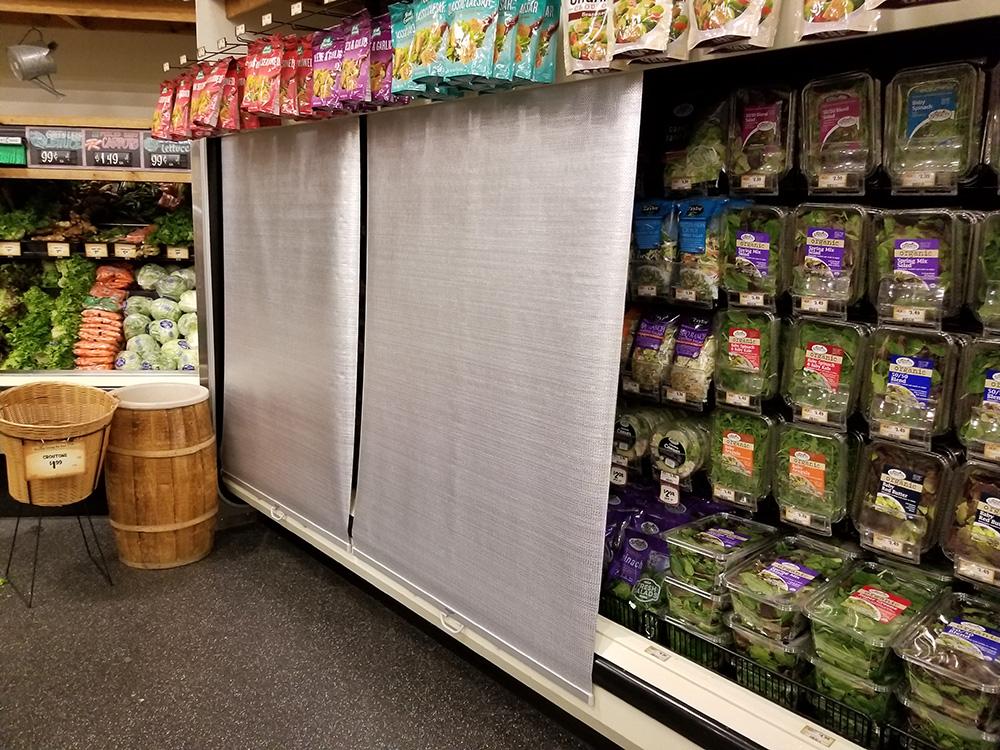
By creating a thermal barrier over open refrigerated cases, night covers stabilize internal temperatures overnight, reduce refrigeration load, and protect perishable goods from the stresses of fluctuating conditions. For operations managers, understanding the relationship between ambient infiltration, product degradation, and labor requirements highlights the value of integrating night covers into daily store routines.
The Problem of Ambient Infiltration
Open refrigerated cases, by design, expose products to store air. During the day, this encourages shopper engagement and impulse purchases, but overnight exposure presents challenges:
- Temperature Fluctuations: Warm ambient air enters open cases, raising product surface temperatures and creating stress on refrigeration systems.
- Moisture Variation: Infiltration can alter humidity levels, accelerating dehydration or condensation on perishable items such as meats, seafood, and produce.
- Product Degradation: Changes in temperature and humidity increase spoilage rates, leading to more trim and discarded items.
Meat display lighting, produce display lighting, bakery display lighting, and seafood display lighting can maintain visual appeal during operating hours, but they cannot compensate for the negative effects of overnight ambient air intrusion. Without proper overnight management, staff face increased labor to inspect, rotate, and discard items before they reach the sales floor.
Night Covers as a Solution
Econofrost night covers act as an effective thermal barrier, addressing the core issue of ambient infiltration. By covering open refrigerated cases during non-operational hours, these covers help maintain a more consistent internal environment:
- Temperature Stabilization: Covers prevent warm air from entering the case, maintaining the cold air generated by refrigeration systems.
- Humidity Control: Reduced air exchange minimizes moisture loss or accumulation, keeping produce crisp, meats firm, and baked goods fresh.
- Enhanced Energy Efficiency: Stabilized temperatures reduce compressor workload overnight, lowering energy consumption while supporting sustainability goals.
- Operational Convenience: Staff can deploy and remove covers easily, allowing morning stocking and merchandising to proceed without delay.
Using night covers ensures that the benefits of food-safe LED lighting, balanced spectrum LED fixtures, and low heat LED lights are fully realized. Products remain visually appealing and safe, preserving freshness until shoppers return in the morning.
Impact on Labor Costs
Labor costs in fresh-food departments are heavily influenced by the need to inspect, trim, and discard spoiled items. Ambient infiltration overnight increases the frequency of these tasks:
- Meat Departments:- Elevated temperatures can cause discoloration and dehydration, requiring additional trimming and rotation before display.
- Produce Sections:- Leafy greens, herbs, and fresh-cut vegetables lose moisture faster under fluctuating humidity, increasing waste and labor to maintain display quality.
- Bakery and Deli Cases:- Humidity swings can dry out bread, pastries, and prepared foods, necessitating more frequent replacement.
By stabilizing overnight conditions, night covers reduce the frequency of spoilage-related labor. Staff spend less time assessing and rotating products and more time on merchandising and customer service tasks, enhancing overall department efficiency.
Reducing Food Waste and Discard Costs
Beyond labor, food waste represents a direct operational cost. Ambient infiltration accelerates spoilage, causing retailers to discard items prematurely. Night covers mitigate this issue by:
- Protecting Product Integrity:- Consistent temperatures and controlled humidity slow spoilage of perishable items.
- Extending Shelf Life:- Meat, seafood, produce, bakery, and deli products remain fresher for longer, reducing the volume of discarded goods.
- Supporting Store Sustainability Goals:- Less waste contributes to environmental stewardship while improving profitability.
The combined effect of improved temperature control and moisture management translates into lower discard rates, reduced labor, and better inventory management. Econofrost night covers, when paired with properly configured refrigerated display cases, optimize operational efficiency and safeguard revenue
Operational Best Practices
To maximize the benefits of night covers, stores should follow best practices in deployment and maintenance:
- Full Coverage:- Ensure that night covers extend across the entire refrigerated surface to minimize air intrusion.
- Daily Routine:- Integrate cover deployment and removal into store opening and closing procedures.
- Regular Cleaning:- Maintain hygiene by cleaning covers regularly to prevent contamination.
- Staff Training:- Educate personnel on the proper use of night covers to guarantee consistent results.
- Integration with Lighting:- Position LED lighting to maintain balanced illumination for meat, produce, bakery, deli, and seafood displays without interference from covers.
Implementing these practices ensures that night covers deliver consistent benefits in energy savings, labor reduction, and product preservation.
Supporting Fresh-Food Department Performance
Econofrost night covers complement other operational strategies to enhance fresh-food department performance:
- Optimized Display Lighting:- Balanced spectrum LED lighting maintains accurate product colors, enhancing shopper confidence.
- Low Heat LEDs:- Reduced heat output from lighting minimizes additional thermal load on cases.
- Enhanced Refrigeration Efficiency:- Covers work in tandem with modern refrigeration systems to maintain optimal temperatures with less energy.
Together, these elements create a stable environment that maximizes product appeal, extends shelf life, and supports daily store operations.
Conclusion
Ambient air infiltration is a hidden but significant factor contributing to spoilage, labor, and discard costs in fresh-food departments. Econofrost night covers provide a practical and effective solution, acting as a thermal barrier during non-operational hours. By stabilizing temperatures, controlling humidity, and reducing refrigeration load, night covers preserve the quality of meat, produce, bakery, deli, and seafood products while minimizing labor and waste. When integrated with energy-efficient refrigerated cases and food-safe LED lighting, night covers support operational efficiency, sustainability, and profitability. Retailers who adopt night covers as part of their fresh-food management strategy benefit from reduced trim, lower discard rates, and a more productive, cost-effective department.