
Specific challenges in island/coffin freezer units and how proper covers address them
Freezer islands, often referred to as coffin or horizontal freezer units, are widely used in supermarkets, grocery stores, and specialty retailers for frozen foods such as meat, seafood, ice cream, frozen vegetables, and ready-to-eat frozen meals. Unlike vertical refrigerated or freezer cases, island freezers present unique operational challenges, particularly regarding thermal retention, energy efficiency, and product protection. While vertical cases benefit from natural air stratification and easier access for night covers, island units expose their entire top surface to ambient store air, making them highly susceptible to heat gain and cold air loss during non-operational hours. Econofrost night covers are engineered to address these challenges, providing a practical solution for energy savings and product preservation.
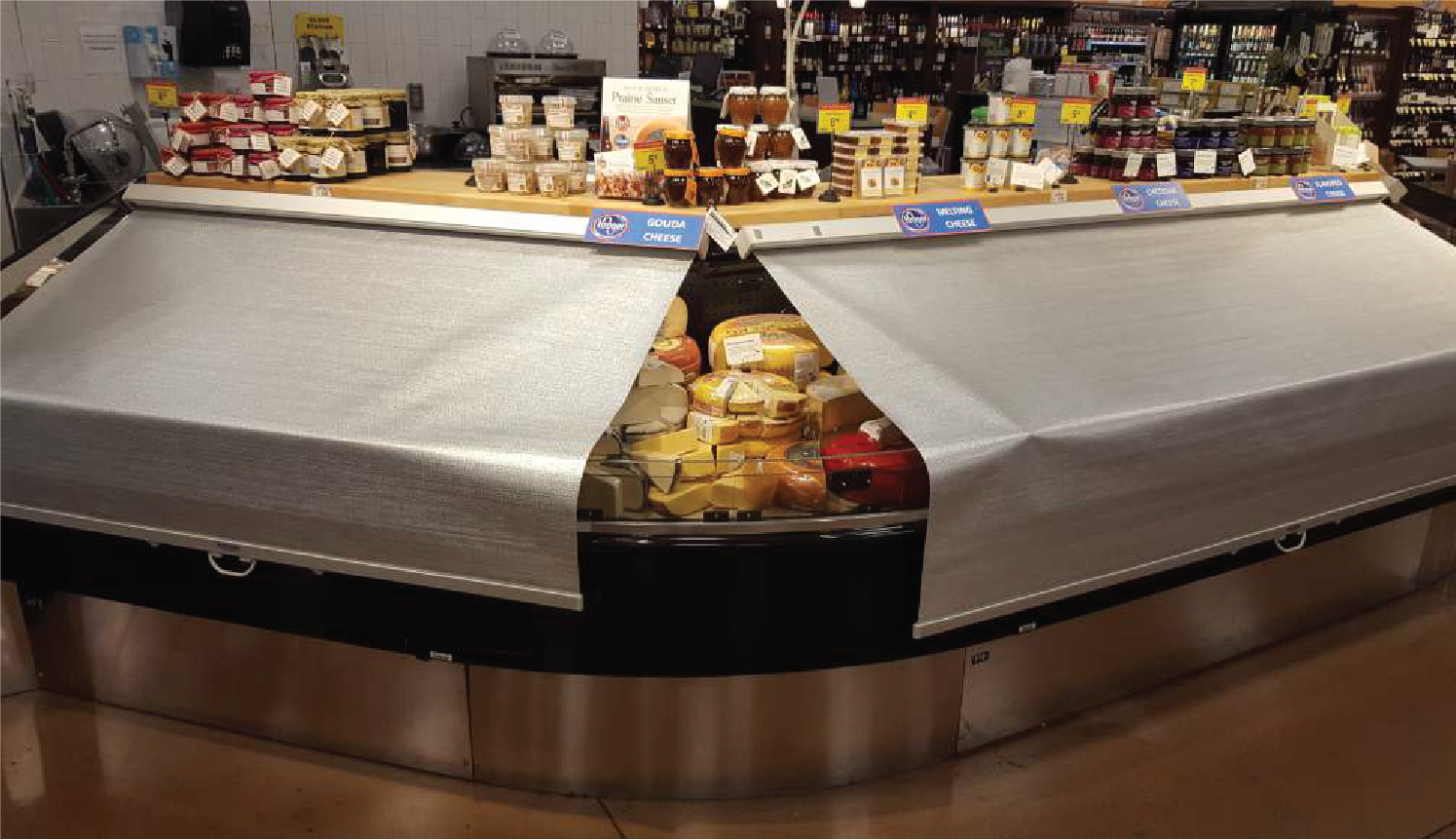
Properly designed night covers for freezer islands help maintain consistent internal temperatures, reduce the load on refrigeration systems, protect frozen inventory from partial thawing, and support operational efficiency. Understanding the differences between freezer islands and vertical cases highlights why standard night cover designs may not always be suitable and why tailored solutions are necessary.
How Night Covers Improve Freezer Island Performance
Properly designed night covers offer multiple benefits for island freezer units:
- Thermal Retention:- Econofrost night covers act as a thermal barrier, reducing the escape of cold air overnight. By covering the entire top surface, these covers prevent ambient store air from infiltrating the freezer, maintaining low temperatures and minimizing thawing risk for sensitive frozen products.
- Consistent Temperatures: Keeps meat, seafood, frozen produce, and packaged frozen foods at stable temperatures overnight.
- Reduced Freezer Load: Less thermal gain decreases the need for refrigeration systems to work overtime, promoting energy efficiency and equipment longevity.
- Energy Efficiency:- Energy use in freezer islands is a significant operational cost. Open top units are particularly energy-intensive because their exposed surface allows continuous heat gain. Night covers help by:
- Lowering Compressor Workload:- Maintaining internal temperatures reduces compressor cycling frequency, resulting in energy savings.
- Supporting Sustainability Goals:- Reduced energy consumption aligns with store-wide sustainability initiatives, minimizing carbon footprint.
Econofrost designs night covers to maximize insulation without interfering with daily operations, ensuring energy savings without compromising accessibility.
- Protection Against Frost and Condensation:- Freezer islands often experience frost accumulation on surfaces due to moisture infiltration. Night covers help manage these conditions by:
- Reducing Air Exchange:- Slows the influx of humid ambient air that contributes to frost formation.
- Maintaining Product Appearance:- Prevents excessive frost on product packaging, improving visual appeal for shoppers.
- Lowering Cleaning Requirements:- Less frost buildup reduces the frequency and intensity of cleaning routines, saving labor hours.
Design Considerations for Freezer Island Covers
Econofrost night covers for freezer islands differ from vertical case covers in several important ways:
- Full-Surface Coverage:- Island covers must extend over the entire open top and, in some cases, partially over the sides to prevent air intrusion.
- Flexible Materials:- Covers are often constructed from insulated, moisture-resistant fabrics or rigid panels designed for repeated deployment.
- Ease of Deployment:- Covers should be easily placed and removed by staff without disrupting morning stocking or product rotation routines
- Storage Considerations:- Foldable or rollable designs allow covers to be stored compactly when not in use, accommodating limited backroom space.
- Custom Fit:- Freezer islands vary in size and shape, making tailored cover solutions necessary to ensure thermal efficiency and usability.
By considering these design factors, stores can maximize the benefits of night covers while maintaining operational efficiency.
Operational Advantages
Implementing night covers on freezer islands offers several operational advantages:
- Reduced Product Thaw Risk:- Minimizes partial thawing and freezer burn, preserving product quality.
- Lower Shrinkage:- Stable overnight temperatures reduce spoilage, resulting in less trim and discarded products.
- Energy Savings:- Maintains cold air in the case, reducing overall energy consumption and refrigeration load.
- Staff Efficiency: Easier morning start-up with stable product temperatures allows staff to focus on merchandising and stocking rather than re-chilling products.
These advantages reinforce the value of night covers as both an energy-saving tool and a product-protection strategy.
Conclusion
Freezer islands pose unique challenges compared to vertical refrigerated cases due to their open top surfaces, exposure to ambient air, and higher risk of frost and product degradation. Econofrost night covers are specifically engineered to address these challenges, providing thermal retention, energy efficiency, frost control, and operational convenience. By deploying properly fitted, moisture-resistant, and easy-to-use night covers, retailers can maintain product integrity, reduce energy consumption, minimize spoilage, and improve overall department efficiency. Integrating night covers with refrigerated display cases for meat, produce, bakery, deli, and seafood ensures that frozen goods remain visually appealing, safe, and ready for shopper purchase.
CTA
To explore professional night cover solutions for freezer islands and refrigerated display cases, visit:
https://www.econofrost.com
| Feature | Vertical Case Covers | Freezer Island Covers |
|---|---|---|
| Coverage | Front-facing openings | Entire top surface (+ partial sides if needed) |
| Thermal Challenge | Moderate air infiltration | High air infiltration due to exposed top |
| Deployment | Simple pull-down | Foldable, rollable, or hinged for multiple sides |
| Frost Management | Less critical | Essential due to large exposed surface |
| Accessibility | Single side | Multi-sided access for staff and shoppers |
Understanding these differences ensures that stores select night covers appropriate for each type of display, maximizing efficiency and product protection.
Comparison with Vertical Case Covers
While vertical case night covers focus primarily on the front opening of the case, freezer island covers must address a broader surface area and higher exposure to ambient air. Key differences include:
