
[fsn_row][fsn_column width=”12″][fsn_text]
Introduction
Large grocery chains operate dozens or even hundreds of locations, yet many still lack a standardized way to measure refrigeration performance across stores. Without benchmarking, it becomes difficult to identify inefficiencies, compare performance, or control rising utility costs. One of the most critical but often overlooked issues is store-level energy inefficiencies, which vary significantly from one location to another.
A refrigeration energy benchmark allows retailers to understand how each store performs under similar conditions and identify gaps in efficiency. By comparing energy use, temperature stability, and operational practices, grocery chains can make informed decisions that improve performance across their entire network.
For practical refrigeration optimization insights and case efficiency solutions, many retailers refer to www.econofrost.com, which provides guidance on improving refrigeration systems through structured, store-level strategies.
- Why Benchmarking Refrigeration Performance Matters: Refrigeration is one of the largest energy consumers in grocery retail operations. Without benchmarking, stores may unknowingly operate at very different efficiency levels even when using similar equipment.
Key issues include:- Inconsistent cooling performance across locations
- Uncontrolled energy consumption variations
- Difficulty identifying inefficient stores
- Lack of standardized performance expectations
These challenges are often linked to supermarket refrigeration efficiency differences between stores. Some locations may operate optimally, while others suffer from hidden inefficiencies that increase costs significantly.
Benchmarking helps create a clear baseline, making it easier to measure improvement and identify problem areas.
- Establishing Key Refrigeration Performance Metrics: To build an effective benchmark, grocery chains must first define what will be measured. These metrics should reflect both energy usage and system behavior.
Important performance indicators:- Energy consumption per store or per case
- Temperature consistency across refrigerated zones
- Frequency of compressor cycling
- Product freshness retention rates
These metrics help evaluate refrigeration thermal performance, which directly impacts both energy efficiency and product quality.
When tracked consistently, these indicators reveal whether a store is operating efficiently or experiencing hidden performance issues.
- Identifying Temperature and Airflow Variations: Temperature stability is one of the most important factors in refrigeration benchmarking. Even small variations can significantly impact product quality and energy consumption.
Common issues to monitor:- Uneven cooling between identical stores
- Hot and cold zones inside display cases
- Frequent temperature fluctuations during peak hours
- Poor airflow distribution across refrigeration units
These conditions often reflect refrigerated case temperature instability, which leads to inconsistent product preservation and increased energy usage.
In addition, airflow disruptions such as blocked vents or overstocking can cause refrigerated case airflow issues, reducing overall system efficiency.
- Energy Loss Patterns Across Store Networks: One of the biggest advantages of benchmarking is identifying energy loss patterns across multiple locations.
Key indicators of inefficiency:- Higher electricity usage in similar store formats
- Increased compressor runtime in certain locations
- Uneven cooling despite identical equipment
- Rising energy costs without increased sales volume
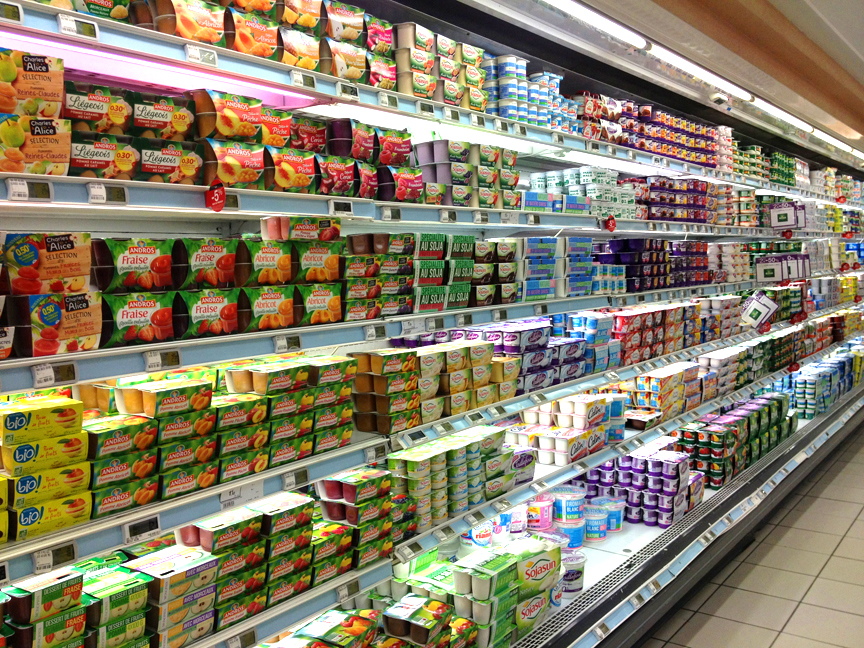
These issues are often associated with heat gain in open refrigeration systems, especially in stores with high customer traffic or poorly managed display zones.
When heat gain is not controlled consistently, refrigeration systems must work harder, increasing overall energy consumption.
- Standardizing Operational Practices Across Stores: Benchmarking is not only about equipment performance—it also includes how stores are operated daily. Small operational differences can significantly impact refrigeration efficiency.
Best practices to standardize include:- Consistent product stocking methods
- Standard airflow clearance rules
- Uniform case loading guidelines
- Controlled door-opening procedures during restocking
These practices directly support grocery store refrigeration optimization, ensuring that all locations operate under similar efficiency conditions.
When operations are standardized, performance differences become easier to identify and correct.
- Using Benchmark Data to Improve Efficiency: Once data is collected, it must be used to improve performance across the chain. Benchmarking allows managers to identify both high-performing and underperforming stores.
Actions based on benchmarking insights:- Replicate best-performing store practices
- Identify and correct inefficient locations
- Optimize refrigeration schedules
- Improve maintenance planning and monitoring
This process helps reduce overall energy waste and supports reduce refrigeration energy consumption goals across the organization. - Over time, benchmarking leads to better decision-making, improved system reliability, and lower operational costs.
- Continuous Monitoring and Improvement Strategy: Refrigeration benchmarking is not a one-time activity—it requires ongoing monitoring and adjustment.
Continuous improvement steps:- Monthly performance comparison between stores
- Seasonal analysis of energy consumption trends
- Regular calibration of temperature systems
- Review of operational compliance across locations
This structured approach strengthens refrigeration performance monitoring, ensuring that inefficiencies are identified early and corrected consistently.
It also helps maintain long-term system stability and prevents performance decline over time.
Conclusion
Building a refrigeration energy benchmark across grocery store chains is one of the most effective ways to improve operational efficiency and reduce energy waste. It provides visibility into performance differences and helps standardize best practices across all locations.
Addressing store-level energy inefficiencies ensures that no store operates below optimal performance, while improving supermarket refrigeration efficiency helps maintain consistent cooling, reduce costs, and enhance product quality across the entire network.
For additional insights into refrigeration benchmarking tools and energy optimization strategies, retailers can explore www.econofrost.com, which offers practical solutions for improving cold-chain performance in real-world grocery environments.
By implementing a structured benchmarking system, grocery chains can achieve measurable energy savings, stronger operational control, and long-term sustainability improvements across all stores.
[/fsn_text][/fsn_column][/fsn_row]